Honour of Annaly - Feudal Principality & Seignory Est. 1172




|

Court Barons of Longford - The Manors and BaronsHow Delvin overlapped—and lawfully succeeded to—princely rightsDelvin’s succession to principality-level rights was not a single act, but a layered overlap in territory, lineage, jurisdiction, and royal recognition. The Nugent Barons of Delvin became successors because their lordship already intersected the same spaces and functions that the Granard assembly once embodied—and the Crown formalized that overlap. 1) Territorial overlap (Delbhna–Teffia as the hinge)Delvin was not separate from the Granard world; it sat inside the same ancient political geography:
Result: Delvin already exercised authority in parts of the same catchment as the Granard assembly. 2) Dynastic overlap (genealogy as legitimacy)The Nugent family were not alien to the region:
Result: Delvin held dual legitimacy—genealogical (native acceptance) and legal (Crown patent). 3) Jurisdictional overlap (court replaces aireacht)What the Granard assembly did is exactly what Delvin’s feudal courts were empowered to do:
Under Philip and Mary, the Crown abolished the Gaelic forum and re-issued its functions to Delvin by letters patent. Result: Function moved intact, only the legal wrapper changed. 4) Economic overlap (markets & fairs follow authority)In Gaelic Ireland, markets followed assemblies; in Tudor Ireland, they followed charters.
Result: Delvin became successor to the economic engine of the principality. 5) Political overlap (chosen intermediary)The Crown needed a successor authority that would hold:
Result: Delvin was selected as the feudal container for princely powers that could no longer exist natively. 6) Temporal overlap (before shiring, not after)Crucially, Delvin’s succession preceded the final shiring:
Result: Delvin bridged the gap, acting as successor before county government fully replaced princely rule. 7) What “successor” really means hereDelvin did not claim:
Delvin did succeed to:
In constitutional terms, Delvin became the successor state, not the successor dynasty. Bottom line (tight and accurate)Delvin overlapped the rights of the principality because it already shared the same territorial sphere (Delbhna–Teffia), possessed indigenous dynastic legitimacy, and exercised parallel judicial and economic functions; Tudor re-grant lawfully transferred the Granard assembly’s public powers into Delvin’s feudal jurisdiction, making the Nugent Barons successors in governance even as Annaly’s princely lineage remained genealogically distinct. There are several Longford and (Pre Longford Westmeath) Grants in the History of Longford related to "court baron", frank pledge, senachals, manors, castles, and hereditaments that were granted to Lord Delvin and the Nugent family in capite or forever. Many of the grants in Longford to Baron Delvin were "in Capite" forever, or for military service and knights fees. These grants even contained "Market and Fair" rights with rights to courts in Longford. Most of the large grants occured with King Philip and Mary, Queen Elizabeth, and King James I. Other grants to Baron Delvin include major land grants in capite from the Commission of the Plantation of Longford.
' VLV.—-27. Grant from the King to Mary, lady Delvin, widow .of lord Christopher, and her son sir Richard Nugent, baron of .Delvin - Westmeath or Longford, Co. The site of the late monastery or Priory of Cannons of the Holy-Island, all the buildings and 2 q" of land within the said site thereof—Darrenye and Dirrenegellsgh, 2 q" each, containing 80‘ arable, 10‘ pasture, ,10‘ underwood, and 80‘ be -in Sruhir, 1 q' containmo 20‘ .arable, and 10‘ pasture—in C arue, l qr containing 80‘ arable and 10‘ wood and underwood—in Kerowbeg , 2 q"I containing 60‘ arable, and 80‘ bog and pasture—in Kerowmore, 1 q' containing 30‘ arable, and 15‘ underwood—in Cashell, 2 q" containing 60‘ arable, and 80‘ wood and pasture—in Kerovantie, 1 q‘ containing 80‘ arable and 10‘. wood and pasture—the rectories, 'vicarages, tithes and hereditaments of Rathline and Cashell—the' vicarages and tithes of Sruhir, Killire, Killnomer, and Kilronen, and the tithes of the rectories—the tithes of the lands of Dirreine and Dirrenegealagh; parcel of the estate of the said prior ; demised in reversion to Christopher lord Delvin, 10 June 28‘h liz. for 80 years at 21l 9‘ 0d Ir.—Westmeath Co’. The town or hamlet of Hilton, with 2 messuages, 8 cottages, 240‘ arable, pasture, meadow, and beg; parcel of the estate of the late Friary of Fower; ,valued at 2‘ 13‘ 4‘ by the year.—Longford, Co’. A castle and certain lands containing 1 cartron or the 4“ part of a carucate in Monilagan; parcel of the estate of Rory Bane M“ Laughlin, attainted ; valued at 8‘ Ir.—in Aughengor, 1} cartron; parcel of the estate of Morogh O’Farrell and Connor M‘ Auly of the same, attainted; valued at 1‘ 4d Ir.—the castle of Newton, and a moiety of 8 cartrons in Corbally and Newton; parcel of the estate of Lisau h Dufi'e O’Farroll of Corballye, attainted; valued at 3‘ 4d Ir.—t e moiet of 1 cartron in Newton and Corbally; parcel of the estate of rian Mc Shane, late of Newton, attainted; valued at 1‘ 4‘ Ir.—an island and half a cartron called the Cloninge, or Cloning; parcel of the estate of Cahell O’Farroll of the same, attainted; valued at 2‘ 6d—the castle of the Monte or Moate and 5 cartrons there; parcel of the estate of Rossey O’Farroll, valued at 13‘ 4" Ir.-the castle and 2 cartrons of Lisnevoa, valued at 6‘ Ir.—in Killenlassaragh or Killenasaragh, 46l—in Ballim‘karmick, 86'; all being parcels of the estate of the said Rosse O’Farroll, valued at 30’—in Bealamore, l cartron, and the lough of Mill-Heade near Granardkille; parcel of the estate of Gerald Mc Teige, attaintcd; valued at 2’ 6d.——WESTMEATH Co’. In Clonlonan Bar. In Monkston; near. Balliloghlo 2 small cartrons, each containing 1 carueate; parcel of the estate of the Abbey of Larha, in Longford co..6‘ 8d lr.—Total rent 271 12‘ 4“ Ir.— To hold forever in fee farm as of the castle of Dublin, in common socage, and tomaintain upon these premises two able horsemen of the English nation, or born within the Pale, for the defense of the. kingdom—7 Dec. 3'“.
References
In the 13th Century in England the barons ceased to be peers, unless so created, but in Scotland, up to the
year 1587,—in which year, various acts, drawn up by Lord Menmuir [see article BALCARREs, ante, p. 199] were passed
for regulating the form and order of parliament and the vote of the barons,—the title of baron was common to all
the landed proprietors or lairds, holding their lands directly of the Crown.
The feudal system was introduced into England by the Norman Conquest. Its pressure on the common people was
aggravated by the completeness of the subjection of the Saxon race. All the land was held by feudal tenure, and
there was no allodium. The few Saxons who were permitted to retain their lands were brought under the feudal
system; and the thanes were reduced to the condition of franklins, or simple freeholders. The Normans, who held
most of the manors from the king, were called tenants-in-chief (in capite); and they were bound to knight
service—that is, to maintain in the field, for forty days at a time, a certain force of their subtenants. This
service extended to religious foundations and monasteries. Exclusive of these, 1400 tenants-in-chief and about 8000
mesne lords (holding fiefs not directly from the crown) are enumerated in Domesday Book.
| ||||||||||
About Longford Feudal Prince House of Annaly Teffia Rarest of All Noble Grants in European History Statutory Declaration by Earl Westmeath Kingdoms of County Longford Pedigree of Longford Annaly What is the Honor of Annaly The Seigneur Irish Roots of George Mentz Chronology of Teffia Annaly Lords Paramount Ireland Market & Fair Chief of The Annaly One of a Kind Title Lord Governor of Annaly Prince of Annaly Tuath Principality Feudal Kingdom Irish Princes before English Dukes & Barons Fons Honorum Seats of the Kingdoms Clans of Longford Region History Chronology of Annaly Longford Oldest Gaelic Kingdom Hereditaments Captainship of Ireland Princes of Longford Holy Sites & Gods News Parliament 850 Years Leadership Titles of Annaly Irish Free State 1172-1916 Feudal Princes 1556 Habsburg Grant and Princely Title Rathline and Cashel Kingdom The Last Irish Kingdom Landesherrschaft King Edward VI - Grant of Annaly Granard Spritual Rights of Honour of Annaly Principality of Cairbre-Gabhra House of Annaly Teffia 1400 Years Old Count of the Palatine of Meath Irish Property Law Manors Castles and Church Lands A Barony Explained Moiety of Barony of Delvin Nugents of Annaly Ireland Spiritual & Temporal Islands of The Honour of Annaly Longford Blood Dynastic Burke's Debrett's Peerage Recognitions Water Rights Annaly Property Law Writs to Parliament Irish Nobility Law Moiety of Ardagh Dual Grant from King Philip of Spain Rights of Lords & Barons Princes of Annaly Pedigree Abbeys of Longford Styles and Dignities Ireland Feudal Titles Versus France & Germany Austria Sovereign Title Succession Mediatized Prince of Ireland Grants to Delvin Lord of St. Brigit's Longford Abbey Est. 1578 Feudal Barons Water & Fishing Rights Clan Brehon Tribal Law Comparison Ancient Castles and Ruins Abbey Lara Honorifics and Designations Kingdom of Meath Feudal Westmeath Seneschal of Meath Lord of the Pale Irish Gods The Feudal System Baron Delvin Kings of Hy Niall Colmanians Irish Kingdoms Order of St. Columba Chief Captain Kings Forces Commissioners of the Peace Tenures Abolition Act 1662 - Rights to Sit in Parliament Contact Law of Ireland List of Townlands of Longford Annaly English Pale Court Barons Lordships of Granard Irish Feudal Law Datuk Seri Baliwick of Ennerdale Moneylagen Lord Baron Longford Baron de Delvyn Longford Map Lord Baron of Delvin Baron of Temple-Michael Baron of Annaly Kingdom Annaly Lord Conmaicne Baron Annaly Order of Saint Patrick Baron Lerha Granard Baron AbbeyLara Baronies of Longford Princes of Conmhaícne Angaile or Muintir Angaile Baron Lisnanagh or Lissaghanedan Baron Moyashel Baron Rathline Baron Inchcleraun HOLY ISLAND Quaker Island Longoford CO Abbey of All Saints Kingdom of Uí Maine Baron Dungannon Baron Monilagan - Babington Lord Liserdawle Castle Baron Columbkille Kingdom of Breifne or Breny Baron Kilthorne Baron Granarde Count of Killasonna Baron Skryne Baron Cairbre-Gabhra AbbeyShrule Events Castle Site Map Disclaimer Irish Property Rights Indigeneous Clans Dictionary Maps Honorable Colonel Mentz Valuation of Principality & Barony of Annaly Longford Irish Noble Titles of Annaly Longford“The Princely House of Annaly–Teffia is a territorial and dynastic house of approximately 1,500 years’ antiquity, originating in the Gaelic kingship of Teffia and preserved through the continuous identity, property law, international law, and inheritance of its lands, irrespective of changes in political sovereignty.”
Feudal Baron of Longford Annaly - Baron Longford Delvin Lord Baron &
Freiherr of Longford Annaly Feudal Barony Principality Count Kingdom of Meath - Feudal Lord of the Fief
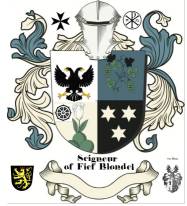
Blondel of the Nordic Channel Islands Guernsey Est. 1179 George Mentz
Bio -
George Mentz Noble Title -
George Mentz Ambassador - Order of the Genet
Knighthood Feudalherr - Fief Blondel von der Nordischen
Insel Guernsey Est. 1179 * New York Gazette ®
- Magazine of Wall Street - George
Mentz - George
Mentz - Aspen Commission - Ennerdale - Stoborough - ESG
Commission - Ethnic Lives Matter
- Chartered Financial Manager -
George Mentz
Economist -
George Mentz Ambassador -
George Mentz - George Mentz Celebrity -
George Mentz Speaker - George Mentz Audio Books - George Mentz Courses - George Mentz Celebrity Speaker Wealth
Management -
Counselor George Mentz Esq. - Seigneur Feif Blondel - Lord Baron
Longford Annaly Westmeath
www.BaronLongford.com * www.FiefBlondel.com |



Commissioner George Mentz - George
Mentz Law Professor - George
Mentz Economist
George Mentz News -
George Mentz Illuminati Historian -
George Mentz Net Worth
The Globe and Mail George Mentz
Get Certifications in Finance and Banking to Have Career Growth | AP News